Revisiting the Moments That Made This Year's Conference Special
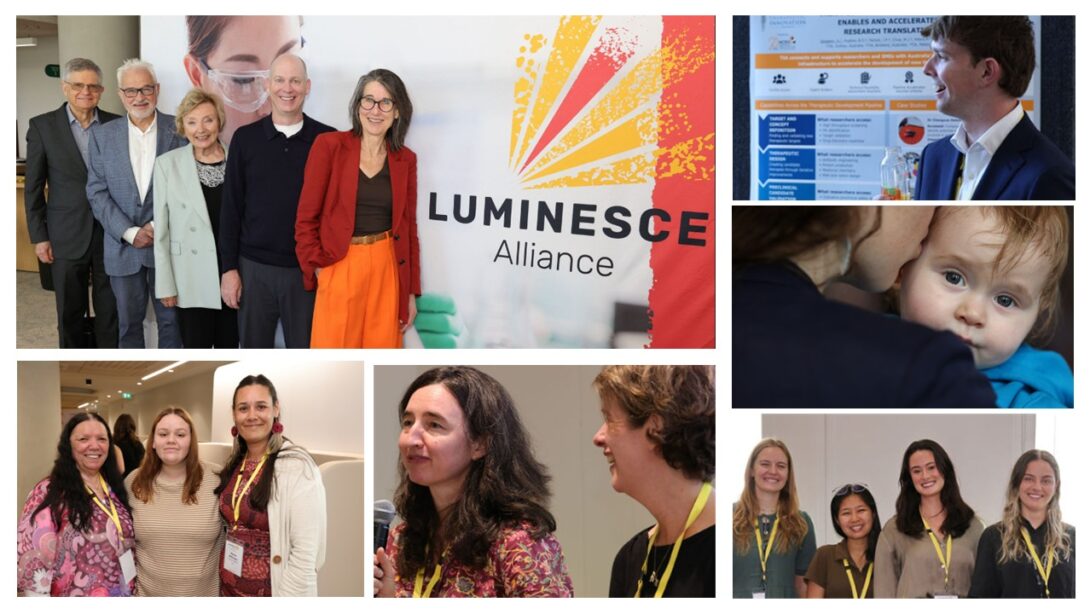
The 2026 Luminesce Alliance conference celebrated ten years of impact in paediatric precision medicine – and highlighted the urgent need for advanced therapies to become available to all children who need them.
More than 200 attendees, including delegates from Luminesce Alliance partner organisations, government, industry, overseas visitors and families of children with rare diseases and cancer, heard that NSW has become internationally respected as a leader in precision medicine.
Speakers outlined incredible advances in paediatric precision medicine, and described how innovation will speed up thanks to AI, computational biology, advanced therapeutics and the introduction of the Single Digital Patient Record (SDPR).
The conference heard how the Zero Childhood Cancer Program means Australia is the only country in the world that provides precision medicine to all children diagnosed with cancer – something that keynote speaker Dr Michael Cox said is an exemplar for how paediatric cancer care should be provided everywhere.
Other precision medicine successes include the THINK Drug Discovery and Kids Advanced Therapeutics programs, which together mean new advanced therapies can be rapidly developed and offered to more children in clinical trials in Australia.
However, the conference heard that access to these treatments remains highly inequitable in Australia, and precision medicine is not yet routinely delivered in the healthcare system.
Researchers and clinicians said there is a disparity between what has been achieved for childhood cancer and what is still to be achieved for children with rare diseases. Families eloquently described the daily rollercoaster of caring for a sick child amid a lack of support or even hope.
“We are not okay,” said Kris Pierce, Strategic Lead, Consumer & Community Engagement – Rare Diseases at UNSW Sydney, whose son has a rare genetic disease. “The families are carrying the load. We all need to be working together because not being okay is not okay.”
A/Prof Michelle Lorentzos, Advanced Therapeutics Medical Lead at The Sydney Children’s Hospitals Network, said there is an urgent need to rethink how to move clinical trials out of the research space and into sustainable, routine care for all children in the NSW health system, no matter where they live.
“The challenge is how do we find families who are knee-deep in looking after their children and don’t have time to think about finding a potential cure? We need to get to a point where families feel less alone and there is a roadmap for treatment based on science and ethics, not on the limitations of the system,” A/Prof Lorentzos said.
To address these challenges, Luminesce Alliance presented IMPACT for Kids as a transformative concept and a pathway worthy of serious consideration for the future of paediatric healthcare and research. As a clinical trials infrastructure that harnesses the power of data and AI, the concept would automatically identify children who may benefit from trial participation and those requiring psychosocial support, ensuring timely and equitable access to care.
Building on a strong track record of working alongside children, families and communities to deliver meaningful impact, IMPACT for Kids seeks to improve equity and access, transform the patient journey, and accelerate research through the use of routinely collected data.
Conference delegates heard that this framework for paediatric medicine has the potential to serve as a blueprint for the future delivery of healthcare, not only for children but ultimately across the broader health system.
Luminesce Alliace chair Kathryn Greiner AO said the economic and societal benefits of investment could be immense.
“My hope is that in the next 10 years every child in Australia will be able to have access to the medical care they need at the time they need it, and with the family being able to understand and being wrapped in the knowledge and care they need,” Ms Greiner said.